

Aesthetics has become far more visible in recent years. Treatments are more widely discussed, more openly marketed and more frequently seen across social media. But while awareness has increased, so too has the need for better education around patient safety.
The industry can sometimes look deceptively simple from the outside. Results are often presented in a polished, aspirational way, while the decision-making behind treatment is barely shown at all. What is less visible, but far more important, is the quality of the consultation, the professionalism of the person providing the treatment, and the standard of care before, during and after the appointment.
That is where patient safety comes in.
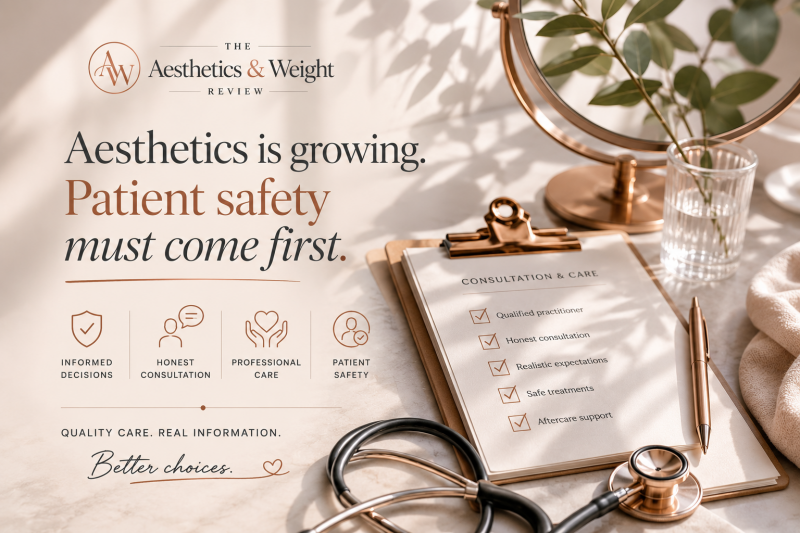
Good aesthetics should never start with pressure or impulse. It should begin with proper discussion, clear information and realistic expectations. A patient should understand what a treatment involves, whether it is suitable, what the limitations are and what aftercare may be required. They should feel informed, not rushed.
This matters because aesthetics is built on trust. People are not simply booking a beauty service. They are placing confidence in somebody’s judgement, skill and professionalism. That decision should be met with care and responsibility.
As the industry grows, patients are becoming more aware of what good standards look like. They are asking better questions. They want to know who they are seeing, how experienced they are, what the approach to consultation is, and whether support is available after treatment. That is a positive sign. It shows a move towards a more informed and mature aesthetics space.
The strongest clinics and practitioners understand that patient safety is not separate from the brand. It is the brand. It shapes reputation, trust and long-term loyalty far more than quick marketing ever will.
Aesthetics can be a highly positive space when it is approached properly. But the standard of care must always come first. Patient safety should never be treated as a side note. It should sit at the centre of every conversation.
Add comment
Comments